

Healthcare data demands more than just hosting.
It demands controlled access, encryption, and ongoing security oversight.
HIPAA Linux hosting is not about choosing Linux as an operating system. It’s about how Linux infrastructure is secured, accessed, maintained, and governed when it stores, processes, or transmits electronic protected health information (ePHI).
Learn How HIPAA Linux Hosting Works — validate whether your Linux environment is appropriate for healthcare data before deployment.
→ This is where most hosting environments fall short — and where HIPAA Vault’s managed Linux hosting is intentionally different.
Why HIPAA Linux Hosting Is Not “Regular” Linux Hosting
Standard Linux hosting environments are built for flexibility and speed, not healthcare compliance.
In most cases, providers:
- Expose servers to the public internet
- Leave access controls to the customer
- Do not manage patching or hardening
- Do not provide audit-aligned logging
- Do not sign a Business Associate Agreement (BAA)
HIPAA does not mandate specific technologies, but it does require safeguards under the HIPAA Security Rule. If those safeguards are missing or misconfigured, the compliance risk remains with the organization — not the hosting provider.
For a deeper breakdown of how these risks are identified, see:
The Essential HIPAA Risk Assessment Guide for Healthcare Organizations
Expertly Managed HIPAA Linux Solutions
From kernel updates to firewall configuration, our engineers manage your Linux environment 24/7/365.
Learn MoreWhat Makes Linux Hosting HIPAA-Aligned
HIPAA Vault’s Linux hosting is designed to support the technical and administrative safeguards outlined in the HIPAA Security Rule, including access control, transmission security, integrity protections, and availability.
For reference, these safeguards are defined by the U.S. Department of Health & Human Services HHS – HIPAA Security Rule Overview
Secure Network Access (HIPAA §164.312(e))
All access to HIPAA Vault’s Linux environment begins with a private OpenVPN connection.
Developers establish an encrypted tunnel directly from the terminal into a restricted private network. Servers are not openly exposed to the public internet.
This approach:
- Protects data in transit
- Limits network access to authorized users
- Reduces external attack surface
Controlled Server Access via SSH (HIPAA §164.312(a))
Once connected through the VPN, users access Linux servers using encrypted SSH.
This allows teams to retain the command-line control Linux is known for, while enforcing:
- Authentication requirements
- Role-based access
- Least-privilege principles
- Access logging
HIPAA requires that access to ePHI be limited to authorized users. SSH access through a private VPN supports that requirement.
Secure Database Management (HIPAA §164.312(c))
Databases are a common source of HIPAA violations when administration tools are exposed or unencrypted.
HIPAA Vault supports secure database access using encrypted connections and hardened management tools, including phpMyAdmin where appropriate.
Safeguards include:
- Encryption at rest
- Encryption in transit
- Restricted administrative access
These controls align with integrity and confidentiality principles also reflected in:
NIST SP 800-53 – Security & Privacy Controls
Managed Security Operations (HIPAA §164.308)
HIPAA compliance is not a one-time configuration.
HIPAA Vault’s Linux hosting includes ongoing operational controls such as:
- Operating system and security patching
- System hardening
- Configuration monitoring
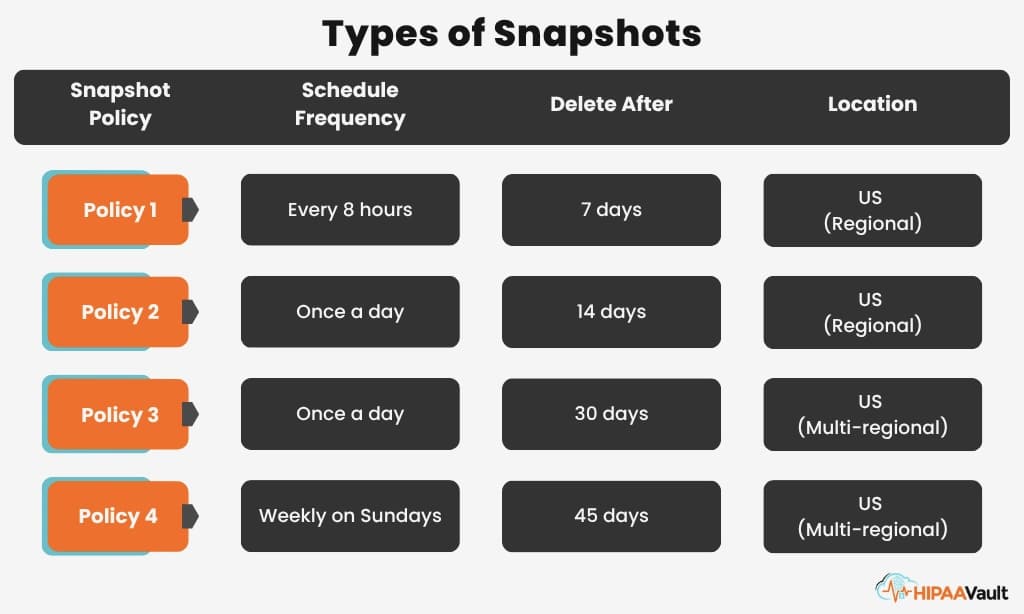
- Encrypted, geo-redundant backups
- Availability and recovery planning
For a deeper breakdown of how hosting models differ in regulated environments, see: Standard Web Hosting vs HIPAA Compliant Hosting
→ Speak With a HIPAA Compliance Engineer — confirm how access controls, VPNs, and administrative responsibilities are shared.
How HIPAA Vault Linux Hosting Works in Practice
A typical workflow looks like this:
- A developer connects to the private environment using OpenVPN
- Encrypted SSH access is granted based on role and authorization
- Applications and databases operate in a hardened Linux environment
- Backups are encrypted and stored redundantly
- Systems are monitored and maintained continuously
The result is a Linux environment that remains flexible for development while aligned with HIPAA safeguard expectations.
HIPAA Linux Hosting vs Standard Linux Hosting
| Capability | Standard Linux Hosting | HIPAA Vault Linux Hosting |
| Business Associate Agreement (BAA) | ❌ Not available | ✅ Provided |
| Network Access | ❌ Public by default | ✅ Private VPN |
| SSH Security | ⚠️ Optional | ✅ Enforced |
| Role-Based Access Controls | ❌ Customer-managed | ✅ Implemented |
| Database Encryption | ⚠️ Inconsistent | ✅ Standard |
| OS Patching & Hardening | ❌ Customer responsibility | ✅ Managed |
| Audit & Access Logging | ❌ Limited | ✅ Continuous |
| Encrypted Backups | ⚠️ Optional | ✅ Geo-redundant |
| HIPAA Security Rule Alignment | ❌ Not designed for HIPAA | ✅ Mapped controls |
→ Request a HIPAA Risk Assessment — get clarity on whether your current Linux environment may introduce compliance exposure.
Who Needs HIPAA Linux Hosting
HIPAA Linux hosting is designed for organizations that handle ePHI, including:
- Healthcare SaaS platforms
- Telehealth and remote care applications
- Medical billing and claims systems
- Healthcare-focused agencies and developers
- Covered entities and business associates
If your Linux server touches ePHI, HIPAA applies — regardless of organization size.
Final Thought
HIPAA Linux hosting is not about checking a compliance box.
It’s about operating infrastructure responsibly under healthcare risk constraints.
This article supports informed evaluation — the landing page closes the decision.
Frequently Asked Questions About HIPAA Linux Hosting
Not sure if your Linux environment meets HIPAA expectations?
→ Request a HIPAA Risk Assessment or Speak with a HIPAA Compliance Engineer to evaluate your current setup.