

If your organization creates, receives, maintains, or transmits ePHI, choosing the right hipaa compliant cloud hosting environment matters from day one. For small medical practices, healthcare startups, and developers building healthcare applications, the challenge is not just finding cloud infrastructure. It is finding an environment that supports HIPAA requirements for security, availability, and patient trust.
HIPAA does not “approve” a hosting company with a one-size-fits-all stamp. Instead, compliance depends on how the environment is configured, how ePHI is handled, what safeguards are in place, and whether the provider will sign a Business Associate Agreement (BAA). That is why healthcare organizations need more than generic hosting.
Request a Free Consultation
Quick 15-minute setup. Trusted by healthcare organizations that need secure, managed infrastructure.
What Is HIPAA Compliant Cloud Hosting?
HIPAA compliant cloud hosting refers to cloud infrastructure and managed services designed to support the protection of electronic protected health information. That includes secure hosting for applications, databases, backups, file storage, and connected systems that may store or process ePHI.
A compliant-ready cloud environment should help support:
- controlled access to ePHI
- encryption in transit and at rest
- activity logging and audit readiness
- backup and disaster recovery planning
- secure infrastructure management
- documented policies and procedures
- a signed BAA when required
In simple terms, standard cloud hosting is built for general workloads. HIPAA compliant cloud hosting for healthcare data is built to reduce risk around sensitive patient information.
Don’t Trust Patient Data to Standard Web Hosting
Protect your practice from breaches and fines. Our hosting includes intrusion detection, firewalls, and audit logs.
Learn MoreDoes Your Healthcare Data Really Need HIPAA Compliant Cloud Hosting?
If your website, portal, app, database, forms, email workflow, backup environment, or internal systems touch ePHI, then yes — your hosting decision is part of your HIPAA compliance posture.
That includes organizations such as:
- private practices
- mental health clinics
- dental offices
- telehealth companies
- healthcare SaaS platforms
- medical billing companies
- developers building healthcare apps
A common mistake is assuming only EHR systems count. In reality, ePHI can appear in far more places than most teams expect: intake forms, contact forms, document uploads, patient messaging systems, admin dashboards, backups, and integrations with third-party platforms.
That is why one of the first questions to ask is not “Which server do I need?” It is: where does our ePHI live, move, and get stored? A formal HIPAA risk analysis for small healthcare practices is often the best place to start.
What Makes a Cloud Hosting Environment HIPAA Ready?
Not every provider offering “secure hosting” is prepared for healthcare workloads. When evaluating hipaa compliant cloud hosting providers, focus on the controls that actually matter.
1. A signed Business Associate Agreement
If a provider creates, receives, maintains, or transmits ePHI on your behalf, they should be prepared to sign a BAA. This is one of the first screening questions to ask. It also helps to understand what a HIPAA business associate agreement should cover before you choose a vendor.
2. Administrative, physical, and technical safeguards
A healthcare-ready hosting environment should support more than just infrastructure. It should fit into a broader compliance program that includes policies, workforce procedures, technical controls, and secure operations.
That means your hosting setup should support:
- secure user administration
- documented roles and permissions
- protected facilities and systems
- logging and monitoring
- incident response processes
- regular evaluation of risks
3. Encryption in transit and at rest
Encryption remains one of the most important controls in any cloud environment handling ePHI. If healthcare data moves between users, applications, databases, and backups, encryption should be part of the design from the start. For deeper guidance, readers can review HIPAA cloud encryption best practices and a PHI database encryption implementation guide.
4. Access control and audit logging
Access to ePHI should be restricted based on job function and business need. That includes unique user accounts, role-based access, and logs that help your team review who accessed data and when.
5. Backups, disaster recovery, and uptime planning
HIPAA is not only about confidentiality. Availability matters too. If systems go down and patient data becomes unavailable, that creates operational and compliance risk. Your provider should support business continuity and disaster recovery hosting as part of the overall environment.
7 Things to Look For in HIPAA Compliant Cloud Hosting Providers
Here is the buyer’s checklist I would use for this post.
1. They will sign a BAA
This should be confirmed early. If the answer is vague, move on.
2. They support secure cloud architecture for ePHI
Your provider should understand how healthcare applications, databases, storage, and backups need to be segmented and protected.
3. They support encryption best practices
Ask how data is protected in transit, at rest, and during backup. Also ask where responsibilities are shared between your team and the host.
4. They provide logging, monitoring, and alerting
Monitoring should cover server health, security events, suspicious behavior, and critical system issues. Strong advanced server monitoring can make a big difference in reliability and response time.
5. They perform vulnerability management
Your infrastructure should be regularly assessed for weaknesses, and there should be a plan to address infrastructure-level findings. This is where managed vulnerability testing and HIPAA penetration testing and vulnerability assessments become especially relevant.
Get a HIPAA Hosting Quote
Built for healthcare workloads with less DIY security overhead.
6. They support backup and disaster recovery
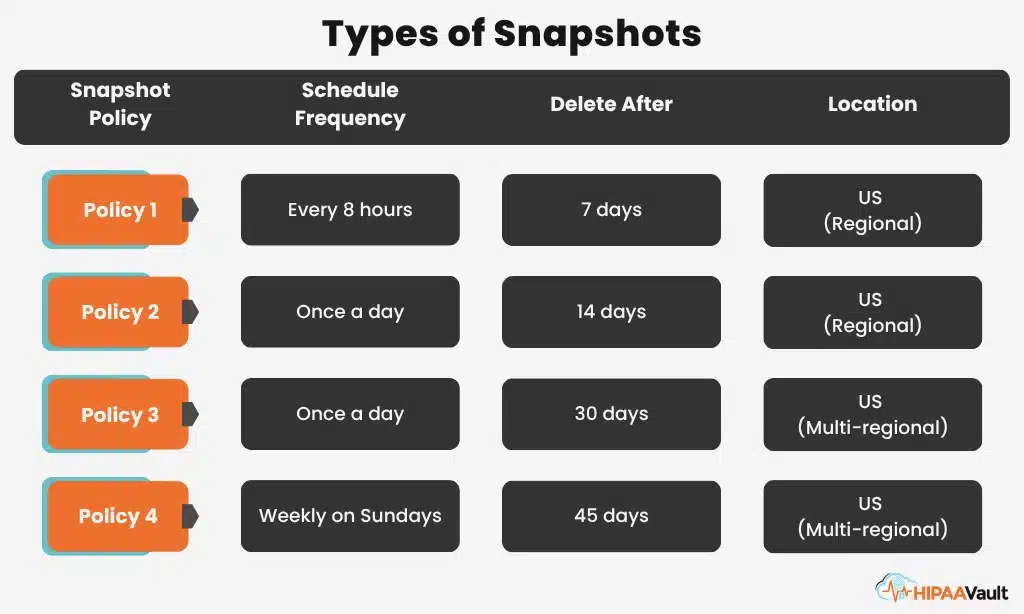
A strong provider should help you plan for outages, recovery, and continuity — not just day-to-day uptime. Features like snapshots and business continuity support can help reduce operational risk.
7. They act like an extension of your team
This is often the difference between a generic cloud vendor and a healthcare-focused managed hosting partner. When issues arise, you need real expertise, not just tickets and delays. Real-world case studies can help demonstrate that difference.
How Small Practices Can Choose the Right HIPAA Compliant Cloud Hosting
For a small medical practice, the best choice is usually the provider that reduces complexity while still giving you the controls you need.
Start with these questions:
- Will they sign a BAA?
- What systems will store or process ePHI?
- How is data encrypted?
- How is access restricted?
- What gets logged?
- How are backups handled?
- What support is included?
- Who is responsible for patching, monitoring, and remediation?
This is also where many smaller organizations benefit from a managed environment instead of trying to assemble everything internally from multiple vendors. Helpful resources here include HIPAA cloud security best practices, a HIPAA security risk assessment, and the tradeoffs between self-managed vs. fully managed HIPAA hosting.
Common Mistakes to Avoid
Assuming any major cloud platform makes you compliant
The cloud platform alone does not make your organization HIPAA compliant. Configuration, contracts, access controls, risk analysis, and operations all matter.
Focusing only on storage
ePHI does not just sit in one database. It often moves across forms, apps, integrations, backups, and user workflows.
Treating compliance as a one-time project
A secure environment needs ongoing review. Systems change. Staff changes. Risks change. That is why risk analysis, documentation, and technical oversight must continue over time.
Choosing based on price alone
Low-cost hosting can become very expensive if it lacks healthcare-ready controls or creates avoidable compliance risk.
Schedule a Free HIPAA Risk Assessment
Identify gaps before they become audit, breach, or downtime problems.
HIPAA Compliant Cloud Hosting vs Standard Cloud Hosting
A simple comparison block helps this post convert better.
Standard cloud hosting
- built for general workloads
- may not offer a BAA
- limited healthcare-specific guidance
- compliance responsibilities fall heavily on your team
HIPAA compliant cloud hosting
- designed to support ePHI workloads
- includes or supports a BAA
- emphasizes encryption, logging, monitoring, and backups
- better aligned with healthcare security and compliance needs
- often includes managed services and expert support
FAQ
Final Thoughts
The right hipaa compliant cloud hosting solution should do more than give you server space. It should support a secure, reliable environment for your healthcare data, reduce operational burden, and help your team protect patient trust.
If you are comparing providers, start with the basics: BAA, encryption, access control, backups, vulnerability management, and support. Those six areas will tell you far more than a generic “secure hosting” claim ever will.